
As a roofing specialist with over 15 years of experience in Southern California, I've seen a recurring pattern each autumn. A homeowner in Rancho Cucamonga might notice a faint, brownish stain on their ceiling after a rare late-summer shower. It’s easy to dismiss, but as October arrives, that small sign becomes a source of anxiety about the approaching winter rains. That seemingly minor stain is often the first clue of a problem we see frequently: roof flashing failure.
Flashing is the thin metal material - typically aluminum, steel, or copper - that directs water away from critical areas where your roof meets a vertical surface. Think of chimneys, skylights, walls, and vent pipes. When it works, you never notice it. When it fails, it becomes one of the most common sources of roof leaks. With the roof flashing rain season just around the corner, now is the perfect time to understand the warning signs.
Common Signs and Symptoms
Identifying flashing issues early can save you from costly interior water damage. Our trained technicians are systematic when inspecting a roof, but you can spot many of these clues from the ground or by taking a careful look inside your home.
- Interior Water Stains: This is the most obvious red flag. Look for discoloration on ceilings or walls, particularly near fireplaces, skylights, or in rooms directly below where two roof planes meet in a valley.
- Peeling Paint or Damp Drywall: Before a full-blown stain appears, you might notice paint bubbling or peeling on interior walls or ceilings. The drywall may also feel soft or damp to the touch after it rains.
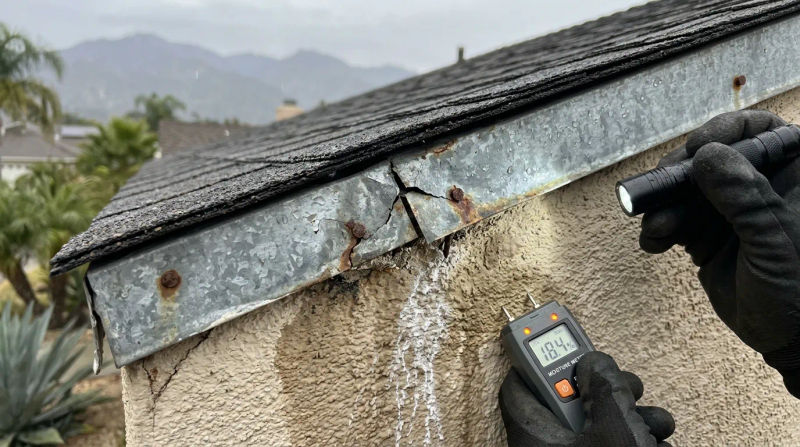
- Visible Rust or Corrosion: Take a look at your roof from the ground. If you can see rust stains on the flashing itself or running down your shingles, it means the metal’s protective coating has worn away, and the material is deteriorating.
- Cracked or Missing Sealant: The edges of flashing are often sealed with caulk or roofing cement. The intense Inland Empire sun bakes these materials, causing them to dry out, shrink, and crack over time. This is especially common around pipe collars, leading to plumbing vent flashing cracks.
- Lifted or Loose Flashing Sections: Strong winds and the constant cycle of thermal expansion (heating in the sun) and contraction (cooling at night) can loosen the nails and fasteners holding flashing in place. A piece of flashing that is visibly bent, lifted, or out of place is a direct entry point for water.
- Debris Buildup: In many Rancho Cucamonga neighborhoods, the complex, multi-gabled rooflines popular on homes built in the 1980s create numerous valleys. Leaves, pine needles, and other debris can accumulate in these areas, trapping moisture directly against the flashing and accelerating corrosion.
- Mold or a Musty Odor: If you notice a persistent musty smell in your attic or upper-floor rooms, it’s a strong indicator of a slow, long-term leak that has allowed mold and mildew to grow within your walls or ceiling.
What Causes This Problem
A roof flashing failure isn't random; it's typically the result of specific environmental factors and wear over time. Understanding the root cause helps in determining the right solution.
- Age and Sun Exposure: Simply put, materials don't last forever. Here in Rancho Cucamonga, the relentless sun and high temperatures are the primary culprits. UV radiation breaks down sealants and protective coatings on metal, making them brittle and weak long before the rains arrive to expose the vulnerability.
- Improper Installation: Flashing installation is a craft that requires precision. Each piece must be layered correctly with the roofing materials to create a watertight barrier. This is especially true for step flashing along a wall. We often find that leaks are caused not by a failed material, but by an installation that cut corners, such as using face-nailed flashing (where nails are exposed) or relying too heavily on sealants instead of proper mechanical layering.
- Complex Roof Architecture: The beautiful Neo-eclectic homes common in this area, with their multiple gables, dormers, and intersecting rooflines, have significantly more flashing than a simple ranch-style home. Each corner, valley, and transition is a potential point of failure that requires expert installation and regular inspection.
- Building Movement: A house naturally settles over time. This subtle movement can be enough to create small gaps between the flashing and the adjacent surface (like a chimney or wall), breaking the watertight seal.
When to Call a Professional
While it might be tempting to climb up on the roof with a tube of sealant, flashing repair is rarely a simple DIY job. The risks of an incorrect repair often outweigh the potential savings.
Attempting a repair without understanding the proper layering techniques can trap water instead of shedding it, making the leak worse. For example, a proper step flashing repair Rancho Cucamonga involves carefully removing shingles, replacing and correctly layering the metal pieces one by one, and then reinstalling the shingles. Simply smearing sealant over the area is a temporary fix that often fails within a single season and hides the true source of the problem.
You should call an experienced professional if:
- You see any signs of interior water damage.
- You can see visibly rusted, loose, or damaged flashing from the ground.
- You are not comfortable or experienced with working safely at heights.
- The leak is occurring at a complex intersection, such as where a dormer meets the main roof or around a chimney.
Our technicians are trained to perform a full diagnostic. They don't just patch the symptom; they trace the path of water intrusion back to its source. This organized workflow ensures we identify the root cause - whether it’s a simple sealant issue or a systemic installation problem - and implement a durable, long-term solution.
Conclusion
Your roof's flashing is a small but essential component of its overall defense system against water. Given the intense sun exposure it endures in our region, it's also one of the most vulnerable. Ignoring the early warning signs, especially with the rainy season approaching, can turn a minor repair into a major headache involving drywall, paint, and potential mold remediation.
Being proactive is key. Take a few minutes this month to check for the common signs of roof flashing failure. Addressing a small crack in a sealant or a single loose piece of flashing now is far simpler and less expensive than dealing with an active leak during the first big storm of the season.
If you notice any of these signs, contact a local roofing professional for an inspection. An expert assessment can provide peace of mind and ensure your home is secure and ready for whatever the coming winter brings.