
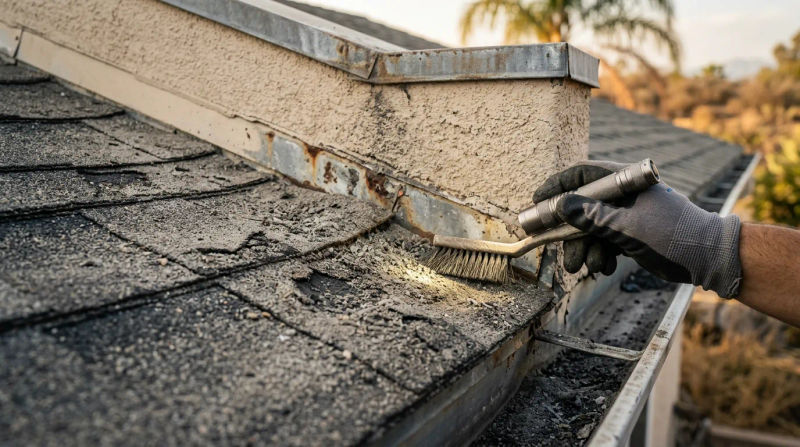
As a roofing specialist with over 15 years of experience here in Orange County, I’ve seen the aftermath of countless wildfire seasons. Often, homeowners in Tustin are diligent about cleaning ash from their cars and patios, but they overlook the place where it settles most: the roof. You might look up at that light gray dusting and think it’s just a cosmetic issue that the first winter rain will wash away. Unfortunately, that’s rarely the case. September is a critical month for us. The late-season fires leave their mark, and we know the first significant Pacific storm system is just around the corner. That’s when dry, seemingly harmless ash transforms into a corrosive and abrasive slurry, creating problems that can silently degrade your home's most important protector.
This article is designed to help you understand what our trained technicians look for during a post-fire season inspection. We'll walk through the subtle but significant signs that a wildfire ash roof situation needs professional attention before minor issues become major leaks.
Common Signs and Symptoms
After a season of smoky skies, it’s wise to conduct a visual check of your roof from the ground. Our crews follow a standardized process to identify key problem areas, and these are some of the most common red flags we find.
- Visible Ash Accumulation: The most obvious sign is a layer of gray or white powder. Pay close attention to roof valleys, the areas around skylights and vents, and behind chimneys. Dry Santa Ana winds are notorious for pushing fine ash into these nooks and crannies, where it can build up and obstruct water flow.
- Significant Granule Loss: For homes with asphalt shingles, check your gutters and the ground around your downspouts for an accumulation of what looks like coarse, dark sand. These are the protective granules from your shingles. Ash particles are highly abrasive. Wind and rain moving this gritty layer across your roof can cause significant roof granule loss from ash, effectively sanding down the surface and exposing the underlying asphalt to UV rays, which accelerates aging.
- Staining and Discoloration: Ash isn't chemically inert. When it mixes with morning dew or light humidity, it can create alkaline chemicals that stain or bleach roofing materials. You might notice patchy discoloration on asphalt shingles or light-colored concrete tiles.
- Clogged Gutters and Drainage Paths: Ash combines with leaves and other debris to form a dense, heavy sludge. This is often the first and most immediate problem homeowners face after the first rain. This sludge can completely block gutters and downspouts, causing water to back up and overflow, potentially seeping under the eaves and into your roof deck or walls.
- Pitting or Corrosion on Metal Components: The corrosive nature of wet ash is particularly tough on metal. Inspect your roof’s flashings (the metal strips in valleys and around penetrations), vent pipes, and metal gutters. Look for signs of dulling, rust-colored staining, or fine pitting on the surface. This is a clear indicator of ash damage on shingles and surrounding components.
- Debris Underneath Roof Tiles: Many homes in the Tustin area, particularly those built in the 1990s and 2000s, feature beautiful Mediterranean-style tile roofs. While tiles themselves are durable, ash can be blown underneath them, settling directly on the critical waterproof underlayment. This hidden layer of abrasive debris can slowly wear down the underlayment every time the tiles shift or expand, creating a pathway for future leaks.
- A Gritty Surface Texture: If it can be done safely, feeling the surface of a shingle will tell you a lot. A roof coated in ash will feel like fine-grit sandpaper. This texture is a direct warning sign of the abrasive damage that is likely occurring.
What Causes This Problem
Understanding why ash is so damaging helps underscore the importance of addressing it promptly. It’s not just dirt; it’s a complex material with destructive properties.
First, there's the physical abrasiveness. Wildfire ash is composed of tiny, sharp-edged particles of minerals and charred organic matter. When wind blows these particles across your roof or rain washes them into channels, they act like a scouring pad. This action is the primary cause of roof granule loss from ash, which strips away the protective top layer of asphalt shingles and shortens the lifespan of the entire roof system.
Second is the chemical composition. Wood ash is naturally alkaline. When it gets wet, it creates a caustic solution with a high pH, similar to lye. This corrosive slurry chemically attacks roofing materials. It can break down the petroleum-based binders in asphalt shingles, eat away at the galvanized coating on metal flashings, and etch the sealed surfaces of some roof tiles. This chemical attack is accelerated by the Southern California sun.
Finally, ash is excellent at retaining moisture. The fine particles act like a sponge, holding water against your roof surface long after a storm has passed. This prolonged dampness promotes the growth of moss and algae, which can lift shingles and trap even more water. On tile roofs, if ash gets to the underlayment, it can hold moisture against the wood decking, leading to rot that goes unnoticed for years.
When to Call a Professional
Some minor cleanup can be handled by a homeowner, but it’s crucial to know your limits and prioritize safety above all else.
Cleaning dry, loose ash from a low-slope, easily accessible roof section might be a DIY task if you have the proper safety equipment, including a harness, non-slip shoes, and a respirator. Similarly, cleaning sludge from gutters can be done from a sturdy, well-placed ladder.
However, we strongly recommend calling an experienced professional for a comprehensive Tustin CA ash roof assessment in most situations. Here’s when it's essential:
- Your roof is steep, high, or has multiple levels. Walking on any roof is inherently dangerous, and the risk is not worth it. Our crews are equipped with OSHA-compliant safety gear and are trained to navigate complex roof structures safely.
- You have a tile roof. As mentioned, the real damage often lies hidden beneath the tiles. Professionals know how to lift tiles without causing damage to inspect the underlayment - a task that can easily lead to broken tiles and bigger problems if done incorrectly.
- You see significant granule loss or metal corrosion. This isn't just a cleaning issue; it's a damage assessment issue. A qualified inspector can determine if the damage is cosmetic or if it has compromised the roof's integrity, requiring repair or accelerating the need for replacement.
- You want a thorough cleaning. Simply hosing down a roof can do more harm than good, forcing abrasive particles deeper into the surface and potentially causing water intrusion. Our technicians use specific low-pressure washing techniques and cleaning solutions designed to neutralize the ash’s pH and safely remove it without causing further damage.
Conclusion
Here in Tustin, dealing with a wildfire ash roof is becoming a regular part of fall home maintenance. It's tempting to dismiss it as a temporary mess, but its abrasive and corrosive properties pose a real threat to the longevity of your roofing system. The key is to be proactive. Addressing ash accumulation in September, before the winter rains arrive, can prevent the material from turning into a destructive slurry that clogs gutters, corrodes flashings, and wears down the very surface of your roof.
An early assessment can catch these issues while they are still minor. Don't wait for a leak to tell you there’s a problem.
If you notice any of these signs, contact a local roofing professional for an inspection.