
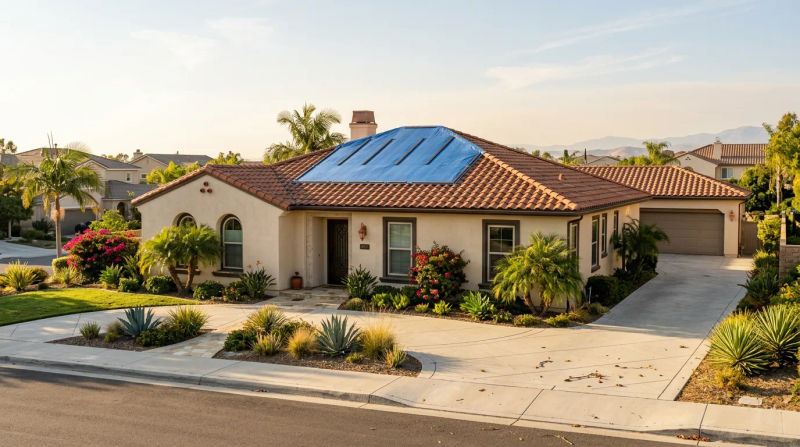
As a Senior Roofing Specialist with Grageola Roofing, I’ve seen firsthand what a burst of severe weather can do to a home. That’s exactly what happened one windy September afternoon in Tustin. We received a call from a homeowner in a state of understandable panic. The notorious Santa Ana winds had been howling for hours, and they had just found several dislodged shingles scattered across their backyard. With a rare early-season rainstorm showing up in the forecast for later that week, their concern was immediate and justified: a damaged roof is an open invitation for water damage. They knew they needed professional help, and they needed it fast. Their home, a beautiful 1950s ranch-style house, was characteristic of the neighborhood, but its age also meant its roofing system could be more vulnerable. They called Grageola Roofing looking for a solution before a small problem turned into a catastrophe.
The Assessment
I arrived at the Tustin property later that same day to perform a full inspection. From the ground, I could see the missing shingles the homeowner had mentioned, but the true extent of the problem is only ever visible from the roof itself. As I safely accessed the roof, my 15 years of experience told me what to look for. This was a classic case of Santa Ana wind damage roof Orange County homes often suffer from. The high-velocity, turbulent winds had attacked the most vulnerable points of the roof: the rake edges and the ridge cap.
Here’s what I documented:
- Uplifted Shingles: Along the primary wind-facing slope, dozens of asphalt shingle tabs had been lifted. The sealant strips holding them down had failed under the immense pressure, breaking the bond and leaving them loose.
- Missing Ridge Cap: A significant section of the ridge cap - the shingles that cover the peak of the roof - had been completely torn off, exposing the felt paper underlayment beneath.
- Aging Underlayment: The home's 1950s origin meant it had likely been re-roofed in the late 90s or early 2000s. The exposed underlayment was an older-style organic felt paper. After decades of heat cycles, it had become brittle and fragile. It was not a reliable water barrier on its own and could easily tear further or allow water to penetrate if left exposed to rain.
- Debris and Granule Loss: The surface of the roof was littered with debris, and there was significant granule loss on the affected shingles, a sign of abrasion and age-related wear accelerated by the wind event.
The immediate diagnosis was clear. The roof’s integrity was compromised. Without intervention, the forecasted rain would almost certainly lead to water intrusion, potentially damaging the attic insulation, drywall, and interior of the home. The priority was to establish a secure, waterproof barrier immediately. This is where our emergency response protocols at Grageola Roofing truly shine.
Our Solution
Facing a tight deadline with rain on the way, we implemented a two-phase solution designed for speed, safety, and long-term effectiveness.
Phase 1: Same-Day Emergency Roof Tarping
The homeowner needed a reliable temporary roof covering before rain Tustin weather was about to deliver. A cheap blue tarp simply thrown over the roof wouldn't survive another wind gust. Our approach is far more robust. We immediately dispatched a specialized crew to implement our professional roof tarping service.
Our process was methodical:
- Preparation: The crew first cleared the damaged area of any loose shingles and debris to create a smooth surface. This prevents the tarp from being punctured from underneath.
- Tarp Deployment: We used a heavy-duty, 10-mil reinforced polyethylene tarp, which is significantly thicker and more tear-resistant than standard hardware store tarps. We carefully rolled it out to cover the entire damaged section, from the ridge down over the eave, ensuring at least four feet of overlap on all sides of the compromised area.
- Secure Fastening: This is the most critical step. Instead of using sandbags or rocks that can shift, we secure the tarp using 1x3 wood furring strips. These battens are placed over the tarp along its perimeter and at key intervals in the field. We then drive gasketed roofing screws through the wood and tarp, anchoring them firmly into the roof decking below. This method creates a tight seal and prevents wind from getting underneath the tarp, ensuring it stays put until we can return for the permanent repair.
Within three hours of my initial assessment, the home was fully protected. Our same-day roof tarp service Tustin homeowners count on had done its job, providing immediate peace of mind.
Phase 2: Permanent Wind Damage Repair With the emergency averted, I presented the homeowner with a detailed proposal for the permanent fix. Given the age of the shingles and the extent of the damage on that slope, a simple patch-job wouldn't be a lasting solution. We recommended removing all the shingles on the affected slope, replacing the compromised underlayment, and installing a new, modern roofing system on that section.
Our 5-person installation crew began the work two days later. We removed the temporary tarp and all the old shingles. We found one sheet of plywood decking near the ridge that showed minor staining, so we replaced it to ensure a solid foundation. Then, we installed a high-performance synthetic underlayment, which offers superior water resistance and durability compared to the old felt paper. Finally, we installed new architectural shingles, carefully matched to the color of the existing roof, and finished with a high-wind-rated ridge cap, fastened according to modern building codes to prevent future blow-offs. The entire permanent repair was completed by the Grageola Roofing team in just one day.
The Results
By acting decisively, the homeowner completely avoided the costly and stressful consequences of interior water damage. The results of our two-phase approach were a complete success.
- Immediate Protection: Our emergency roof tarping successfully weatherproofed the home, holding strong through the light rain that fell two days later.
- A Seamless, Durable Repair: The new roof slope is not only structurally sound but also blends beautifully with the rest of the house. The homeowner was thrilled that the repair wasn't an eyesore.
- Enhanced Wind Resistance: By using modern materials and, most importantly, proper fastening techniques for the new shingles and ridge cap, the repaired section of the roof is now far more resilient to future Santa Ana wind damage roof Orange County is known for.
- Peace of Mind: Most importantly, the homeowner no longer has to worry every time the wind picks up. They have a secure roof and a warranty on our workmanship, backed by the reliability of Grageola Roofing.
This project is a perfect example of how a swift, professional response to roof damage can save homeowners thousands of dollars and immense stress. It’s not just about fixing a roof; it’s about restoring a family’s sense of security in their own home.
Ready for your own Grageola Roofing experience? Contact us today for a free inspection.