
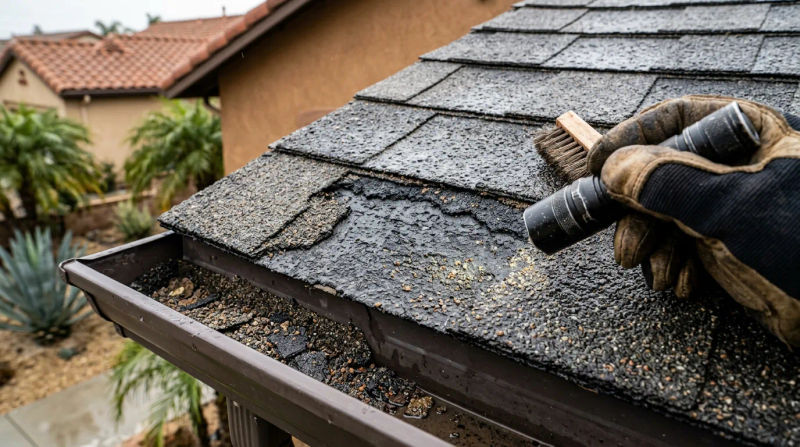
After the first light rains of October, you might head outside to enjoy the freshly washed air and notice something unusual on your driveway or patio. It looks like coarse, dark sand, or maybe tiny pebbles collected in a pile where your downspout drains. Many homeowners dismiss this, but as a roofing specialist with over 15 years of experience in the Santa Ana area, I can tell you that this is often the first, subtle sign of a developing roof issue. Finding roof granules on driveway Santa Ana is a clear signal that your asphalt shingles are aging and losing their primary protective layer. Understanding what this means and when to act can save you from more significant problems as the wetter season approaches.
Common Signs and Symptoms
Identifying shingle granule loss early is key to managing your roof's health. The most obvious sign, as mentioned, is the accumulation of these granules on the ground around your home. Here’s a more detailed checklist of what our technicians are trained to look for during an inspection:
- Granules in Gutters: Before they wash out onto your driveway, loose granules will collect in your gutters. If you're cleaning your gutters and find them filled with a significant amount of this sand-like material, it’s a red flag. A small amount is normal, especially for a new roof, but handfuls are a cause for concern.
- Visible “Bald Spots”: Take a look at your roof from the ground (safely, of course). Do you see areas where the color looks uneven, darker, or patchy? This is what happens when granules wear away, exposing the dark asphalt substrate underneath. These areas are commonly known as bald spots on shingles Santa Ana and are highly vulnerable to sun and water damage.
- Uneven or Faded Color: From a distance, a roof experiencing significant granule loss may look faded or worn out. The granules provide the color for your shingles, so as they disappear, the roof’s vibrant look goes with them.
- Exposed Shingle Mat: In advanced cases, you might see the underlying fiberglass mat of the shingle. At this stage, the shingle has lost almost all of its protective capability and is extremely brittle and susceptible to water intrusion.
What Causes This Problem
Asphalt shingles are designed to shed some granules over their lifespan, but accelerated loss points to underlying issues. The granules serve a critical purpose: they protect the asphalt layer from UV radiation, which would otherwise cause it to dry out, crack, and fail prematurely. Here in Santa Ana, several factors work together to speed up this process.
First and foremost is age. An asphalt shingle roof typically has a lifespan of 20-30 years. As it approaches the end of this period, the bond holding the granules weakens, and shedding increases naturally. Many of the classic single-story Ranch homes in Santa Ana, built in the 1950s, may be on their second or even third roofing system. If your roof was installed 15-20 years ago, you're in the window where age-related granule loss becomes more prominent.
Weather is the next major contributor. Santa Ana’s climate, with its intense sun, can be harsh on roofing materials. The constant UV exposure breaks down the asphalt, loosening the granules. The occasional marine-layer moisture can be absorbed and then evaporate, causing expansion and contraction that further weakens the bond. Finally, our seasonal winds can physically scour the shingle surface, dislodging already-loosened granules.
Other causes our crews frequently diagnose include:
- Physical Damage: Foot traffic during maintenance, falling tree limbs, or hail can knock granules off.
- Poor Installation: Improper nailing or handling of shingles during installation can create stress points that lead to premature wear.
- Manufacturing Defects: While less common, sometimes a batch of shingles may have a defect that prevents the granules from adhering properly from the start.
When to Call a Professional
So, you’ve found granules in your gutters or on the driveway. Is it a DIY situation or time to call for help? The answer depends on the severity.
A few granules after a storm or on a brand-new roof is normal - this is just excess from the manufacturing process. However, if you are consistently finding granules after every rain, or if you can see visible bald spots on shingles Santa Ana, it is absolutely time to seek a professional opinion. The integrity of your roof is compromised.
Attempting to repair this yourself is not recommended. Applying roofing cement or sealant to bald spots is a temporary, often ineffective fix that can trap moisture and cause more damage. Furthermore, walking on an aging, granule-depleted roof can cause more shingles to crack and break, compounding the problem.
When you call an experienced professional, they can perform a safe and thorough assessment. Our technicians, for example, follow a standardized inspection process. We don't just look at the bald spots; we evaluate the entire roofing system to determine the root cause and extent of the shingle granule loss. This allows us to provide a clear diagnosis. Sometimes, a targeted Santa Ana shingle roof repair is sufficient to replace a few damaged sections and extend the roof's life. In other cases, widespread granule loss is a sign that the roof is nearing the end of its functional lifespan and a replacement is the most cost-effective long-term solution.
An expert evaluation gives you a clear understanding of your roof's condition and a reliable path forward, preventing small issues from turning into major leaks when the winter rains arrive in earnest.
Conclusion
Those tiny granules on your driveway are more than just a minor nuisance; they are a critical component of your roof's defense system. They are the armor protecting your home from the sun and rain. Seeing them accumulate is your roof’s way of telling you it needs attention. Ignoring widespread shingle granule loss exposes the vulnerable asphalt layer to the elements, accelerating its decline and paving the way for leaks, water damage, and more expensive repairs down the line.
By being proactive, especially as we head into the rainy season, you can address the issue while it's still manageable. Don't wait for a water stain to appear on your ceiling. A comprehensive inspection can clarify whether a simple repair will suffice or if it's time to plan for a replacement.
If you notice any of these signs, contact a local roofing professional for an inspection.