
It’s a familiar feeling for any Los Angeles resident: after months of relentless sun, the air gets a certain crispness, and we start thinking about the rainy season. While we welcome the relief from the heat and late fire season, that first real downpour can be a moment of truth for your home’s roof. A tiny issue that was invisible during the long, dry summer can quickly announce itself as a dripping ceiling or an ugly water stain. Over my 15 years as a roofing specialist, I’ve seen it time and again: small, preventable problems become costly emergencies because they weren’t addressed in time.
The late summer and early fall period is the absolute best time to assess your roof's condition. The intense UV radiation and heat have been baking your shingles for months, and seasonal Santa Ana winds may have caused subtle lift or damage. Taking a few minutes to look for common roof leak signs now can save you significant headaches and expense later.
Common Signs and Symptoms
From the ground up to the attic, your home provides clues about the health of its roof. Our technicians are trained to spot these indicators during an inspection, and many are things you can look for yourself. Here are some of the most common symptoms we find.
- Ceiling and Wall Stains: This is often the first sign a homeowner notices. These stains typically look like yellowish or brownish circles on the ceiling or streaks running down a wall. They are a clear indication that water has breached your roof, saturated the insulation, and soaked into the drywall.
- Shingle and Material Issues: Take a look at your roof from the ground (binoculars help). Healthy shingles should lie flat. Look for:
- Curling or Clawing: Shingle edges are turning up or the tabs are curling under. This is a sign of weathering and age.
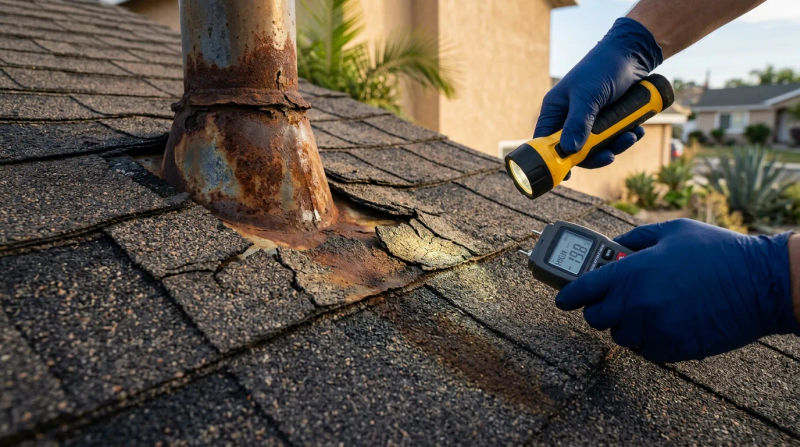
- Cracking and Blistering: Visible cracks or bubbles on the shingle surface are classic shingle blistering symptoms. This is caused by moisture trapped within the shingle during manufacturing or from poor attic ventilation, which is then heated by the sun.
- Missing Shingles or Tiles: After a windy day, it's wise to scan your roof for any missing pieces. Each missing shingle is a direct entry point for water.
- Granules in Gutters: When you clean your gutters, pay attention to what's in them besides leaves. If you see a lot of black, sand-like granules, that’s the protective mineral coating from your asphalt shingles. A certain amount is normal for a new roof, but on an older roof, it means the shingles are balding and losing their ability to protect against UV rays and water.
- Dampness or Musty Odors: If you have an accessible attic, a quick check can be very revealing. A musty, damp smell is a tell-tale sign of a slow leak that hasn't yet shown up on your ceiling. Look for damp or darkened wood and soggy insulation.
- Daylight Through Roof Boards: While in the attic, turn off the lights and look up at the underside of the roof deck. If you see any pinpricks of daylight shining through, you have a direct path for water to enter.
- Damaged Flashing: Flashing is the metal material used to seal the joints around chimneys, vents, skylights, and wall-to-roof transitions. This is the most common source of roof leaks. Look for flashing that is bent, rusted, pulling away, or has gaps in its sealant.
- Sagging Roof Deck: From the outside, look along the ridgeline of your roof. It should be perfectly straight. Any dip, curve, or sagging appearance is a serious red flag. It often indicates that trapped moisture has caused the underlying wood structure (the decking) to rot and weaken.
What Causes This Problem
Understanding the root cause of a roof leak helps in preventing future issues. In Los Angeles, our roofs face a unique set of challenges. The leading causes our teams encounter are:
- Intense UV Exposure and Heat: The Southern California sun is brutal on roofing materials. Over time, it cooks the volatile oils out of asphalt shingles, making them brittle, and accelerates the degradation of all materials. This is a primary driver of cracking and blistering.
- Age and Material Lifespan: Every roof has an expiration date. Many homes in the Los Angeles area, particularly the classic mid-century Ranch homes built in the 1950s, may be on their second or third roofing system. These simple gable and hip roofs are structurally sound, but if the last re-roof was 20-25 years ago, the materials are likely nearing the end of their functional life.
- Wind Damage: While we don't have hurricanes, our seasonal Santa Ana winds can be powerful enough to lift shingle edges, break the sealant strip, and tear shingles right off the roof, leaving the underlayment exposed.
- Debris and Clogged Gutters: This is one of the most frequent Los Angeles ceiling stain causes we diagnose. When gutters and roof valleys are clogged with leaves and debris, they act like a dam. Rainwater backs up, flows sideways, and gets underneath shingles and tiles, where it can saturate the roof deck and find a way into your home.
- Improper Installation or Past Repairs: A roof is a complex system. If flashing wasn't installed correctly, or if a past repair was done with the wrong materials or technique, it creates a weak point that will eventually fail.
When to Call a Professional
Some home maintenance is great for a weekend DIY project, but roofing is rarely one of them. While you can and should visually inspect your roof from the ground and check your attic, any work on the roof itself should be left to experienced professionals.
Safety is the number one reason. Walking on a roof, especially one with a steep pitch or loose granules, is extremely dangerous without the proper safety training and equipment. It's simply not worth the risk.
Secondly, diagnosing a leak is often more complex than it appears. The spot on your ceiling is just the symptom; the entry point on the roof could be many feet away. Water can travel along rafters and decking before it finds a place to drip through. Our technicians are trained to perform a systematic investigation to trace the leak back to its true source. We follow a detailed Los Angeles roof leak repair checklist that covers every vulnerable point, from the eaves to the ridge.
When you hire a qualified professional, you're not just paying for a patch. You're paying for an expert diagnosis and a durable solution. We use the correct materials that are compatible with your existing roof and follow industry-best practices to ensure the repair is integrated seamlessly and holds up for years to come. A quick DIY fix with a tube of sealant might stop a drip for a week, but it often fails and can sometimes trap moisture, making the underlying problem worse.
Conclusion
Your roof is your home's first line of defense against the elements. Being proactive before the Los Angeles rainy season begins is the smartest investment you can make in protecting your property. Take some time this month to walk around your house and look for the common roof leak signs we've discussed: stained ceilings, damaged shingles, and granules in your gutters. Check your attic for any musty smells or signs of dampness.
Catching a small issue now, like a cracked shingle or failing flashing sealant, is a simple and inexpensive fix. Waiting until water is dripping into your living room turns it into a stressful and costly emergency involving not just roof repair, but also potential drywall, paint, and insulation replacement. Don't wait for the rain to tell you there's a problem.
If you notice any of these signs, contact a local roofing professional for an inspection.