
That distinct smell of rain after a long, dry summer is something many of us look forward to. But if you’re a homeowner, that first storm can also bring a sense of unease. You might find yourself wondering if your roof is truly ready to handle the downpour. This is especially true as we head into fall here in Moreno Valley, after months of intense sun have baked our homes. Perhaps you've noticed a faint, musty smell in an upstairs closet, or maybe you saw a discolored spot on your ceiling that you’d previously dismissed. These subtle clues could be pointing to a problem not with your shingles or tiles, but with the critical, hidden layer beneath them: the roof underlayment.
As a specialist who has inspected countless roofs over the past 15 years, I’ve seen how a compromised underlayment can lead to significant issues. This waterproof or water-resistant barrier is your roof's last line of defense against moisture. When it fails, water can seep through to the roof deck, attic, and eventually, into your living space.
Common Signs and Symptoms
Identifying roof underlayment failure early is key to preventing a small issue from becoming a major, costly repair. Before the first significant rains arrive, it’s wise to look for these tell-tale underlayment failure signs Moreno Valley homeowners often encounter. Our trained crews are methodical in looking for these specific indicators during an inspection.
- Water Stains in the Attic: The most direct evidence of a leak is often found inside. On a clear day, take a powerful flashlight into your attic. Carefully inspect the underside of the roof deck (the plywood or OSB sheathing). Look for dark stains, water streaks, or areas that appear discolored. These are classic signs that water has bypassed your primary roofing material and the underlayment.
- Curling, Cracking, or Brittle Shingles: While shingles naturally age, their condition can also signal deeper problems. When the underlayment fails, it can trap moisture or cause excessive heat build-up on the roof deck. This can essentially “cook” asphalt shingles from below, leading to premature curling shingles underlayment issues. For the tile roofs common on homes built in the 1990s and 2000s in this area, underlayment failure can go unnoticed longer, as the tiles themselves remain intact.
- A Musty or Damp Odor: If you notice a persistent musty smell in your attic or on the upper floor of your home, don't ignore it. This odor is often caused by trapped moisture and the slow growth of mold or mildew within the roofing system or attic insulation. It’s a strong indicator that a water barrier has been breached.
- Spongy or Soft Spots on the Roof: This is a critical warning sign. If you are on your roof (which we strongly advise against for safety reasons) and notice areas that feel soft or spongy underfoot, it means the underlying wood decking has begun to rot due to prolonged water exposure. This points to a severe and long-term underlayment failure.
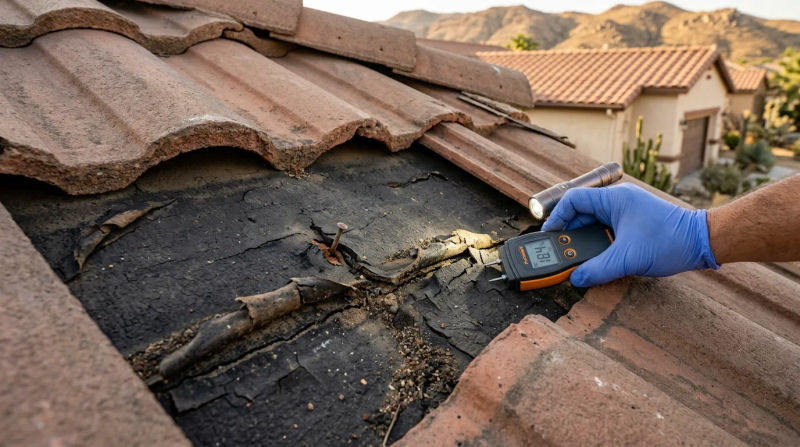
- Visible Deterioration: In some cases, especially around vents, skylights, or along the eaves, you might be able to see the underlayment itself. If it appears cracked, torn, or has turned into a black, flaky substance, it has lost its ability to repel water.
- Granules or Debris in Gutters: When you clean your gutters, pay attention to what you find. While some asphalt shingle granule loss is normal, finding black, brittle pieces of what looks like old tar paper is a red flag. This is often the deteriorating underlayment breaking apart and washing down the roof.
What Causes This Problem
Understanding why underlayment fails can help you appreciate its importance. It isn’t just one thing, but a combination of factors, many of which are pronounced here in Southern California.
Age and Material Lifespan: This is the most common culprit. Many homes in Moreno Valley were built during the suburban boom of the 1990s and early 2000s. These properties often used a standard felt or tar paper underlayment, which typically has an effective lifespan of 20-30 years. Today, many of these original roofs are at or past the point where the underlayment is becoming brittle and ineffective, even if the outer tiles or shingles look fine.
Intense Heat and UV Exposure: Our hot, dry summers take a toll. While the primary roofing material bears the brunt of the sun, the intense heat radiates through, baking the underlayment layer. Over many years, this constant thermal cycling breaks down the oils in asphalt-based felt, making it brittle and prone to cracking.
Improper Installation: A roof is a complex system, and the underlayment is no exception. If the original installers cut corners - by not overlapping the layers correctly, using the wrong type of fasteners, or failing to properly seal around penetrations like vents and pipes - they created weak points from the very beginning. These vulnerabilities are often what cause a roof leak after first rain Moreno Valley storms hit.
Physical Damage: The underlayment can be damaged long after installation. Foot traffic from other trades (like satellite dish or solar panel installers), pests attempting to burrow into the attic, or falling debris during high winds or the late fire season can create tears and punctures that compromise its integrity.
Poor Attic Ventilation: A properly ventilated attic helps regulate temperature and moisture levels. If an attic is poorly ventilated, hot, moist air gets trapped. This can lead to condensation forming on the underside of the roof deck, causing the wood and the underlayment to slowly rot from the inside out.
When to Call a Professional
While identifying some of these signs from the ground or in your attic is a great first step, diagnosing and repairing underlayment issues is not a DIY project. The risks involved with working on a roof, especially the tile roofs common in our area, are significant.
Attempting to lift shingles or tiles to inspect the underlayment can easily cause more damage if not done correctly. A qualified professional has the training, safety equipment, and experience to perform a thorough and safe evaluation. Our technicians follow a standardized process to ensure nothing is missed. This includes:
- A comprehensive attic inspection to look for signs of moisture and ventilation issues.
- A careful on-roof examination of the primary roofing material and all penetrations.
- Methodically lifting shingles or tiles in suspect areas to directly assess the condition of the underlayment and the wood decking beneath it.
- Providing clear documentation, often with photos, to show you exactly what is happening with your roof.
An experienced professional can determine the scope of the problem. Is it a localized tear that can be repaired, or is the underlayment showing signs of systemic, age-related failure? For many homes from the 1990s era, widespread brittleness may mean a full underlayment replacement is the only long-term solution to protect the structure.
Conclusion
Your roof's underlayment is the unsung hero of your entire roofing system. It works silently, day after day, to protect your home from water intrusion. The intense Moreno Valley sun and the simple passage of time are its greatest enemies. By the time you see a stain on your ceiling, the problem has likely been developing for a while.
Being proactive is the best approach. Taking the time now, before the winter rains begin, to look for these early warning signs can save you from the stress and expense of an emergency leak. A small investment in a professional inspection can provide peace of mind or catch a problem while it’s still manageable.
If you notice any of these signs, contact a local roofing professional for an inspection. Don't wait for the first storm to test your roof's integrity.